🚀 Cloud Native Application Platform: Securing Applications from Code to Cloud
Cloud security is undergoing a major transformation.
Traditional security models were built for static infrastructure, predictable deployments, and clearly defined perimeters. But modern applications no longer follow those rules.
Today’s applications are:
- ☁️ Cloud-native
- 📦 Containerized
- 🔄 Continuously deployed
- 🌍 Running across multi-cloud environments
- ⚙️ Built using microservices architectures
This shift has fundamentally changed how organizations must approach security.
Enter the Cloud Native Application Platform (CNAPP) — a unified approach designed to secure modern applications from code to cloud.
☁️ The Rise of Cloud-Native Applications
Modern application development has evolved dramatically over the last decade. Organizations are rapidly adopting:
- Containers
- Kubernetes
- Microservices
- DevOps pipelines
- Multi-cloud deployments
While these technologies accelerate innovation, they also introduce new security risks across the entire lifecycle.
Unlike traditional applications, cloud-native workloads move fast — sometimes hundreds of deployments per day.
Security can no longer operate as a final checkpoint.
It must be embedded into every stage of the lifecycle.
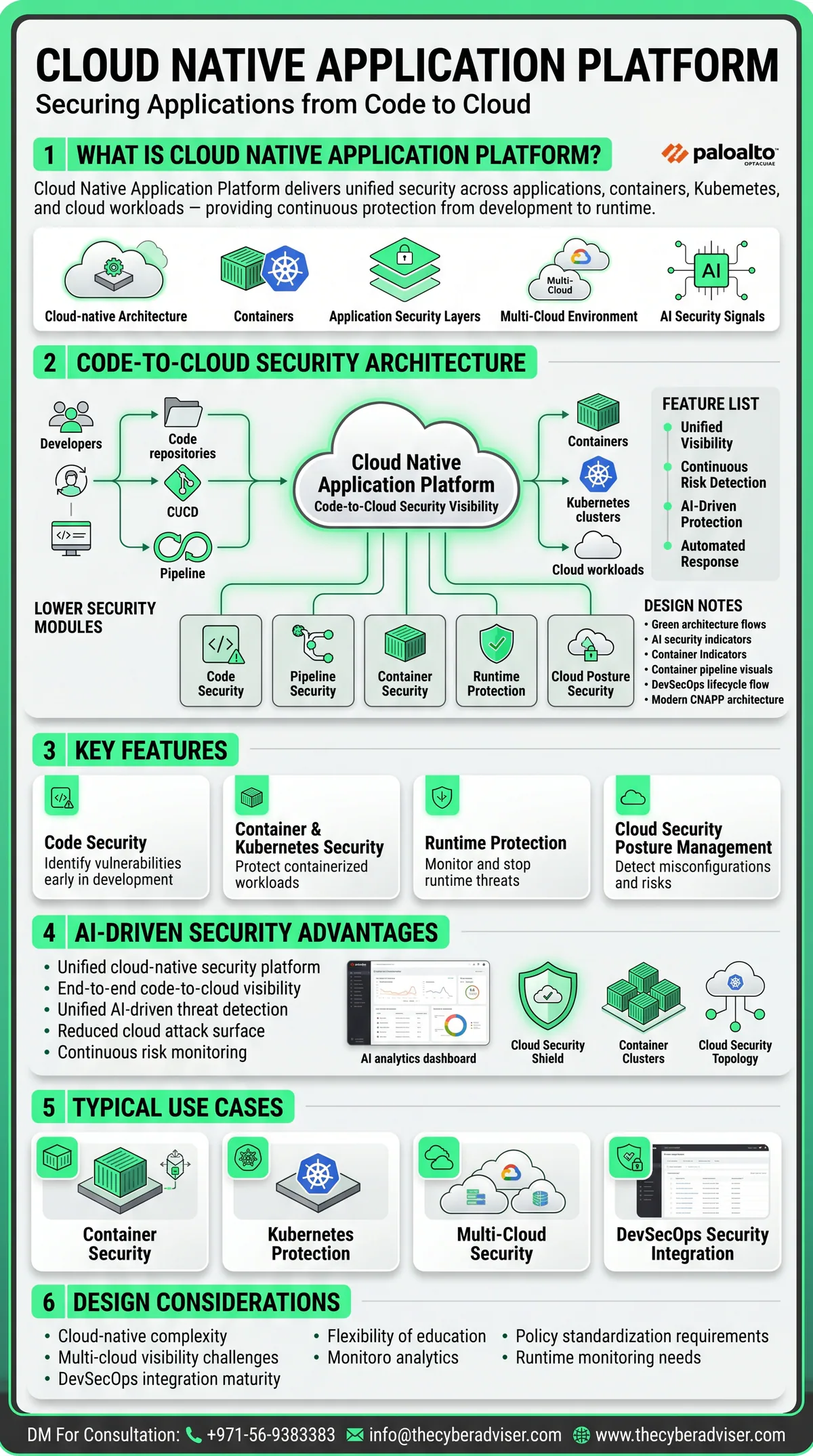
🚨 The New Reality: Code-to-Cloud Risk
Security is no longer limited to infrastructure. Risk now exists across the entire development and deployment pipeline.
Modern Cloud Risk Exists Across:
👨💻 Code & Development Stage
- Vulnerable libraries
- Hardcoded secrets
- Misconfigured dependencies
- Open-source vulnerabilities
🔄 CI/CD Pipelines
- Pipeline misconfigurations
- Privileged pipeline execution
- Unauthorized access to build systems
- Supply chain attacks
📦 Containers
- Vulnerable base images
- Unpatched container images
- Insecure container configurations
☸️ Kubernetes
- Misconfigured RBAC policies
- Exposed APIs
- Insecure cluster configurations
☁️ Cloud Workloads
- Excessive permissions
- Misconfigured storage buckets
- Open cloud services
⚙️ Runtime Environments
- Lateral movement attacks
- Suspicious behavior
- Zero-day threats
If security protects only one layer — attackers simply move to another.
This is why point solutions are no longer enough.
🧠 What is Cloud Native Application Platform (CNAPP)?
A Cloud Native Application Platform delivers unified security across the entire cloud-native lifecycle — from development to runtime.
Instead of deploying multiple disconnected security tools, CNAPP integrates everything into one unified platform.
Core Capabilities of CNAPP
A modern CNAPP delivers:
✅ Code-to-Cloud Visibility
✅ AI-Driven Threat Detection
✅ Container & Kubernetes Security
✅ Runtime Protection
✅ Cloud Security Posture Management
✅ Automated Incident Response
This unified approach helps organizations detect threats earlier and respond faster.
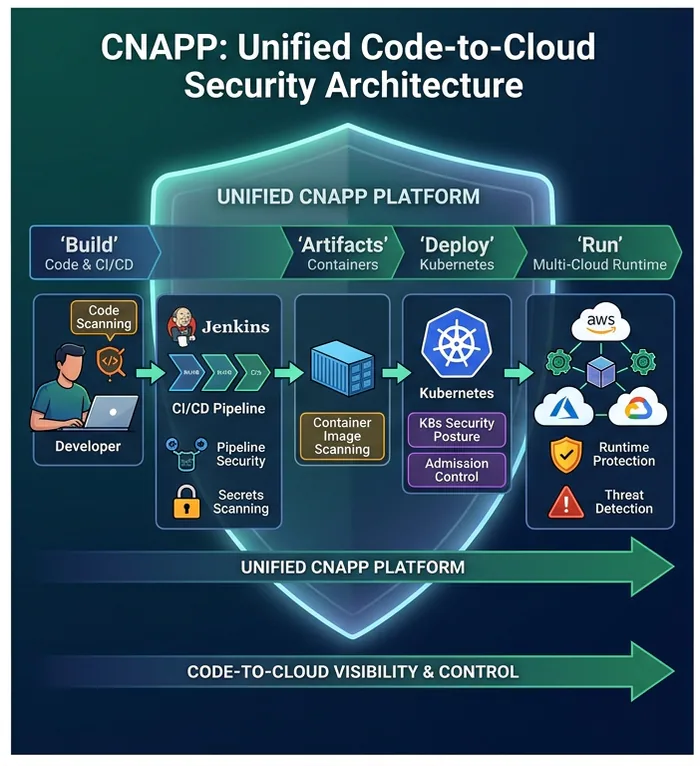
🔐 Key Security Capabilities of Cloud Native Application Platform
1. Code Security
Security starts at development.
Modern CNAPP solutions scan:
- Source code
- Dependencies
- Secrets
- Vulnerabilities
Benefits:
- Identify risks early
- Reduce remediation costs
- Improve developer productivity
2. Container & Kubernetes Security
Containers and Kubernetes power modern applications — but they introduce new attack surfaces.
CNAPP helps:
- Scan container images
- Monitor Kubernetes clusters
- Detect misconfigurations
- Enforce security policies
This ensures secure containerized deployments.
3. Runtime Protection
Runtime protection detects threats while applications are running.
This includes:
- Behavioral analytics
- Process monitoring
- Anomaly detection
- Threat prevention
This helps stop:
- Lateral movement
- Privilege escalation
- Zero-day attacks
4. Cloud Security Posture Management
Misconfigurations remain one of the top causes of cloud breaches.
CNAPP provides:
- Continuous cloud monitoring
- Risk identification
- Compliance tracking
- Configuration enforcement
This reduces exposure across cloud environments.
🌍 Real-World Use Cases
🔥 Use Case 1: Vulnerable Container Deployment
Scenario:
A developer pushes a container image with vulnerable libraries.
Without CNAPP:
- Vulnerability goes unnoticed
- Application deployed to production
- Exploit occurs later
With CNAPP:
- Image scanned automatically
- Vulnerability detected
- Deployment blocked
Result: Threat prevented before production.
⚠️ Use Case 2: Kubernetes Misconfiguration
Scenario:
A Kubernetes cluster is exposed to the internet.
Without CNAPP:
- Attackers discover exposed API
- Gain unauthorized access
With CNAPP:
- Misconfiguration detected
- Security policy enforced
- Access restricted automatically
Result: Exposure eliminated.
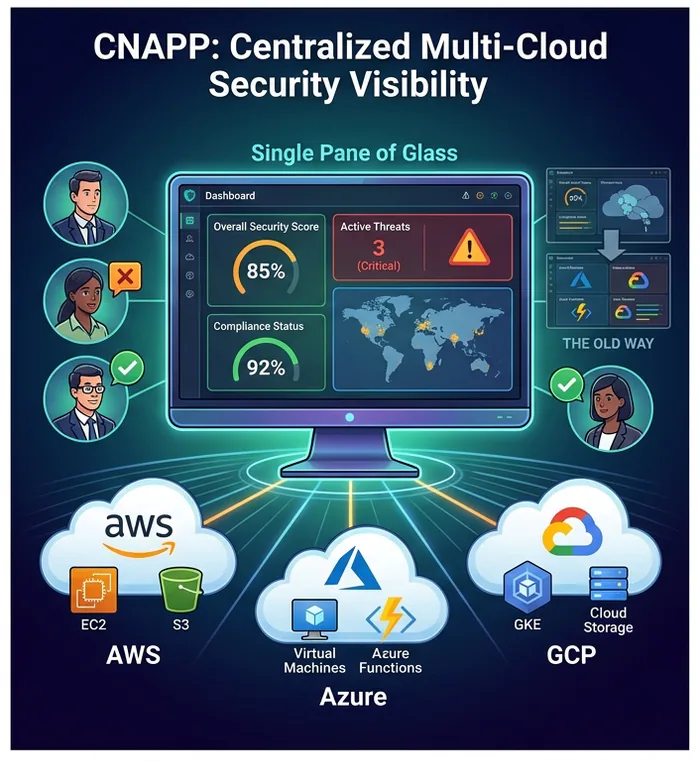
☁️ Use Case 3: Multi-Cloud Security Visibility
Scenario:
Organization running workloads across AWS, Azure, and GCP.
Without CNAPP:
- Fragmented visibility
- Multiple dashboards
With CNAPP:
- Unified multi-cloud visibility
- Centralized risk management
Result: Simplified cloud security operations.
🔥 Why Unified Cloud-Native Security Matters
Cloud-native environments are:
- Dynamic
- Distributed
- Continuously changing
Traditional security tools struggle to keep up.
Organizations still relying on legacy security models face:
⚠️ Visibility gaps
⚠️ Configuration risks
⚠️ Runtime threats
⚠️ Multi-cloud complexity
CNAPP solves these challenges with continuous, unified protection.
🔄 The Security Shift Is Already Happening
Cloud security is evolving rapidly:
From → To
Infrastructure Security → Application-Driven Security
Point Tools → Unified Platforms
Reactive Detection → AI-Driven Protection
Manual Operations → Automated Security
Cloud-native security is no longer optional.
It is becoming foundational to modern cybersecurity strategy.
🎯 Key Takeaways
- Cloud-native applications introduce new security challenges
- Risk exists across the entire code-to-cloud lifecycle
- Point solutions create visibility gaps
- Cloud Native Application Platform provides unified security
- AI-driven detection improves threat visibility
- Runtime protection helps stop active attacks
- Multi-cloud environments require centralized security
🚀 Conclusion
Modern applications move faster than ever.
Security must move even faster.
The Cloud Native Application Platform represents the future of cloud security — delivering code-to-cloud visibility, AI-driven protection, and unified risk management.
Organizations adopting CNAPP gain:
- Better visibility
- Faster detection
- Reduced risk
- Stronger cloud security posture
As cloud-native adoption continues to grow, unified security platforms will become essential for protecting modern applications.
The shift has already started.
The question is — Is your cloud security ready?
Hashtags
#CloudSecurity #CNAPP #CloudNative #Kubernetes #ContainerSecurity #DevSecOps #CyberSecurity